
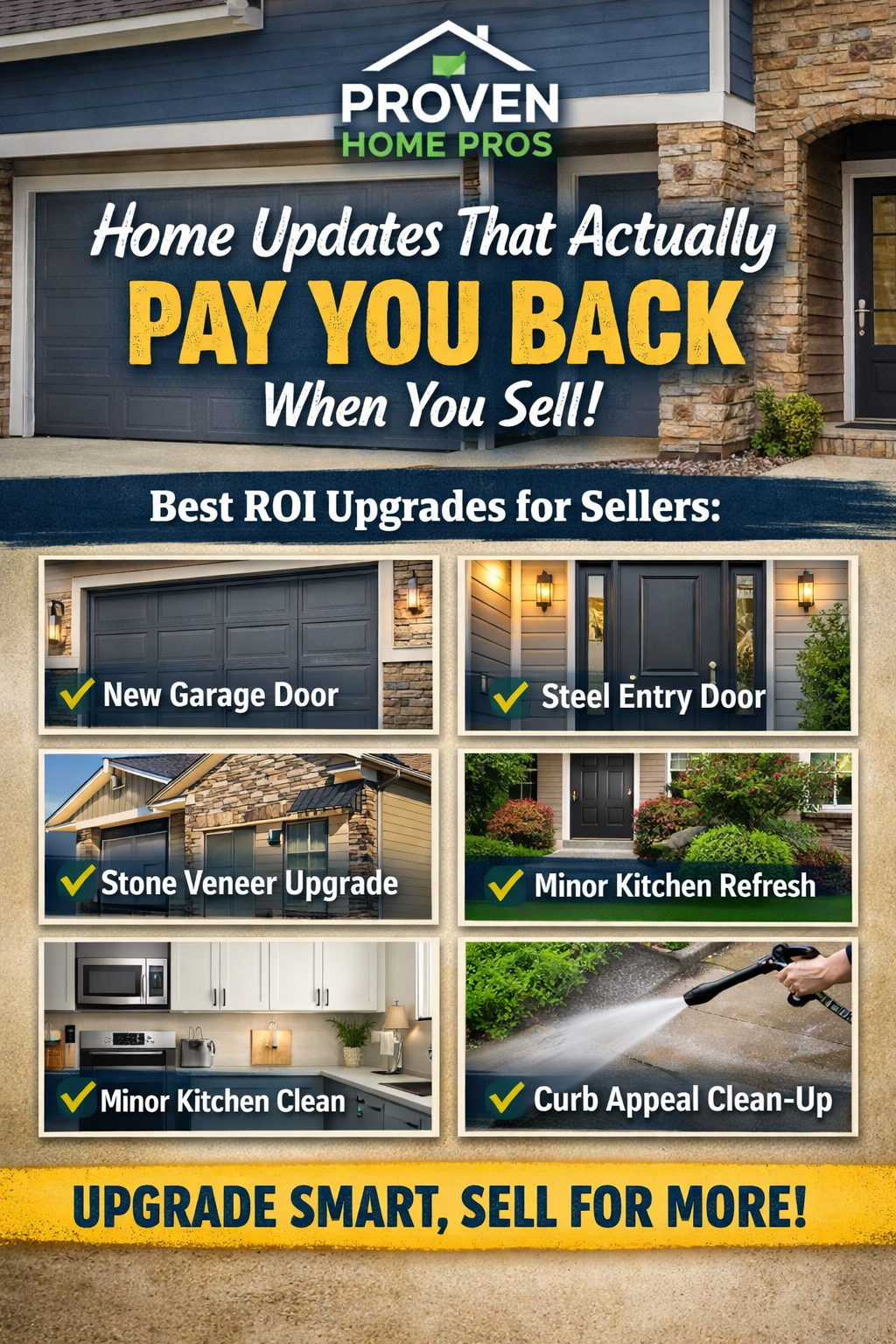
Home Updates That Actually Pay You Back
A 2026 ROI Guide for Greater Cincinnati & Dayton Sellers Who Want to Net More
If you’re thinking about selling your home in Greater Cincinnati or Dayton in 2026, you’re probably staring at a mental tug-of-war: Do I update… or do I just list it and hope buyers “see the potential”?
Here’s the honest answer: in 2026, buyers are still paying for homes that feel well-maintained, updated, and move-in ready—but they’re not writing blank checks for every renovation trend on the internet. The most profitable sellers aren’t the ones doing massive remodels. They’re the ones making strategic, high-impact improvements that boost first impressions, reduce buyer objections, and keep negotiations from eating your equity.
You’re not trying to “win Pinterest.” You’re trying to win offers.
The best home updates before selling in 2026 are the ones that increase perceived value fast and reduce buyer objections—especially curb appeal improvements, garage door and entry upgrades, minor kitchen refreshes, updated lighting/hardware, and clean, neutral presentation. Major remodels often don’t return their cost, and over-improving for your neighborhood is the #1 way sellers accidentally give money away at closing.
In this guide, you’ll learn which updates typically pay you back, what to skip, and a simple decision rule that protects your net proceeds. If you want a tailored plan for your neighborhood—Mason, West Chester, Milford, Loveland, Montgomery, Blue Ash, Springboro, Centerville, Beavercreek, and beyond—Don & Wendi Sheets at Team Proven Home Pros can map out the smartest moves for your home, your timeline, and your goals.
Key Takeaways (TL;DR)
- Exterior first impressions drive offers in 2026. Curb appeal and entry upgrades often deliver the fastest “value bump” without major renovation costs.
- Minor updates beat major remodels more often than sellers expect. Small kitchen and cosmetic refreshes reduce buyer objections and protect your net proceeds.
- Over-improving is a quiet equity leak. The right updates depend on your neighborhood comps, buyer expectations, and price point.
- The smart rule: Only spend money if it will raise sale price or reduce buyer objections—otherwise, price and market strategically.
- A prep + pricing plan creates leverage. Better showing condition often means stronger first offers, fewer inspection concessions, and smoother closings.
The 2026 Reality: Buyers Pay for Confidence, Not Chaos
In 2026, buyers are still making decisions emotionally and justifying them logically. That’s not a character flaw—it’s human nature. When a home feels clean, cared for, and move-in ready, buyers relax. When a home feels “like a project,” buyers start mentally subtracting dollars from their offer.
And in a market where buyers are comparing options (and scrolling listings like it’s their job), your first impression isn’t just important—it’s your opening bid.
What we see in showings across Greater Cincinnati and Dayton is simple:
- Homes that feel “maintained” attract stronger interest earlier.
- Homes that feel “unfinished” invite cautious offers, inspection leverage, and bigger demands.
That’s why the goal isn’t to make your home perfect. The goal is to make your home easy to say "YES!"
The “Smart Update” Wins
If you remember nothing else, remember this: smart updates do two things.
- They make buyers feel like your home is a safe choice.
- They remove reasons for buyers to discount your price.
That’s how you protect equity in 2026—by eliminating doubt.
Which Home Improvements Typically Have the Best ROI in 2026
National ROI lists are useful as a starting point, but your real return depends on your neighborhood, your competition, and your home’s current condition. Still, the same categories keep showing up as consistent winners because they influence perception quickly.
Garage Door Replacement
A garage door takes up a surprising amount of your front-facing visual. A worn or dated door makes the entire home feel older. A clean, modern door makes the home feel updated immediately—before anyone even parks.
This is one of those upgrades that feels almost unfair in how much perception it changes. And perception is what drives offers.
If you want additional renovation ideas that tend to move resale value, here’s a strong internal link that matches this topic beautifully:
10 Top Renos That Will Up the Sale Price of Your Home
Steel Entry Door or Entry Refresh
Buyers read the front door like a handshake. A solid, modern entry door (or a well-refreshed door with updated hardware and clean trim) tells buyers: “This home has been cared for.”
That message matters. In 2026, buyers are still cautious about hidden costs. A home that feels maintained reduces the fear factor—and fear is expensive.
Manufactured Stone Veneer
This one works best when it’s tasteful and limited—around entryways or accent areas. It creates a premium feel without requiring a full exterior overhaul.
But if it turns into an “everything must be stone” situation, you may be buying style points you won’t get reimbursed for. The win is strategic placement.
Minor Kitchen Refresh
Full remodels can be a financial trap close to listing. In 2026, we’re still seeing minor kitchen refreshes outperform big projects in terms of return.
A minor refresh can include:
- Neutral paint (walls and sometimes cabinets, if done correctly)
- Updated hardware
- Modern light fixture(s)
- Updated faucet/fixtures
- Deep clean, declutter, and simplified countertops
Buyers want “bright, clean, and functional.” They don’t necessarily need “brand new custom everything.”
Exterior Cleanup + Landscaping
This category is the MVP of seller prep. Fresh mulch, edging, trimmed shrubs, power washing, clean windows, porch decluttering—these don’t just improve looks. They remove the buyer’s suspicion that bigger things were ignored.
And if buyers suspect neglect, they negotiate harder. So yes, mulch can protect your equity. Life is weird
The Hidden Power of Cosmetic Updates (2026’s Quiet Winners)
In 2026, the “cosmetic” category continues to matter because it’s the fastest way to make a home feel updated without blowing up your budget.
The most common high-impact, low-to-mid cost updates include:
- Fresh neutral paint in main living areas
- Modern lighting (especially replacing dated fixtures)
- Updated hardware on cabinets and doors
- Simple, clean window treatments
- Bathroom refresh items like mirrors, faucets, lighting, and fixtures
These updates do one job: they help buyers focus on your home’s benefits instead of creating a running list of “things we’ll need to fix.”
That shift improves your negotiating position. Because when buyers love a home, they negotiate differently.
The Cincinnati–Dayton ROI Trap (Over-Improving)
Here’s where sellers lose money with the best intentions: they assume national advice equals local results. It doesn’t.
In Greater Cincinnati and Dayton, the right update plan depends on:
- Your neighborhood’s price point and typical finishes
- What your active competition looks like right now
- Your home’s condition and layout
- The likely buyer pool (first-time, move-up, downsizer, relocation)
Over-improving is the #1 seller mistake because it’s quiet. Nobody warns you until the house is listed and the offers don’t reflect your investment.
Discover your home’s value now and unlock your equity by starting with a strategic, neighborhood-specific pricing and preparation plan here:
The Smart Update Rule
Before you invest in any improvement, ask one question: “Will this increase my sale price or reduce buyer objections?”
- If yes → consider it.
- If no → keep your money and adjust pricing/marketing strategy instead.
This rule prevents emotionally satisfying projects that don’t pay you back. Because “I feel better now that it’s updated” is not the same thing as “buyers will pay more.”
Here’s a common 2026 seller scenario we see:
A homeowner is preparing to list and feels pressured to “do everything.” Instead, we prioritize updates that create immediate buyer confidence: exterior cleanup, lighting refresh, entry hardware, fresh neutral paint in key areas, and a minor kitchen refresh (hardware + lighting + declutter + deep clean).
The result is predictable:
- Stronger early interest
- Better first offers
- Less nitpicking during inspections
- Fewer concessions requested
That’s not luck. That’s what happens when a home feels maintained and market-ready.
Selling isn’t just listing. It’s positioning.
Don & Wendi Sheets and Team Proven Home Pros help you:
- Identify the highest ROI updates for your neighborhood (so you don’t overspend)
- Create a cost-smart prep plan that reduces buyer objections
- Price strategically to protect equity and attract strong offers
- Negotiate hard without creating drama (yes, both can happen)
- Guide the transaction so you don’t spend your spring living inside a spreadsheet of stress
If you’re planning to sell in the next 3–6 months, a consult now can help you avoid the two expensive traps: wasting money on the wrong updates and missing the best timing window for your home. Discover your home’s value now and unlock your equity
Timing, Budget, and the “Don’t Start What You Can’t Finish” Rule
Timing
If possible, start planning 6–10 weeks before listing. The goal isn’t to create a construction zone. The goal is to make calm, deliberate choices.
Rushed updates lead to:
- Higher costs
- Sloppy finishes buyers notice immediately
- Contractor scheduling issues
- Stress that spills into pricing and decision-making
Budget
A common guideline you’ll hear is spending a small percentage of home value. In practice, a smarter approach is spending based on impact.
Your budget should follow your strategy. Not the other way around.
The “Finish Strong” Rule
If you start it, finish it. Half-finished updates scare buyers because they signal hidden problems and future costs. If a project can’t be completed cleanly before listing, it’s usually better to skip it and price accordingly.
Why This Advice Is Different
This isn’t theory. It’s what we see every week in real transactions.
Don & Wendi Sheets have 30+ years of experience and 1,600+ successful transactions across Greater Cincinnati and Dayton. That means you’re not just getting ideas—you’re getting a plan informed by what actually works in your neighborhood and price point, right now.
When challenges pop up (and they do), we bring calm strategy, creative solutions, and negotiation skills that protect your outcome.
FAQs About Home Updates Before Selling in 2026
Q: How much should I spend on updates before selling my home in 2026?
A: Spend where it raises sale price or reduces objections. A targeted plan usually beats a big budget with no strategy.
Q: Which room should I update first?
A: Start with first impressions: curb appeal and entry. Then address kitchens and baths with minor refreshes, not major remodels.
Q: Should I renovate if my home is outdated?
A: Not necessarily. Cosmetic improvements plus smart pricing often outperform expensive renovations—especially close to listing.
Q: How long before selling should I start updates?
A: Ideally 6–10 weeks before listing so you’re not rushing decisions and you can complete projects cleanly.
Q: Are smart home upgrades worth it in 2026?
A: Basic features (thermostat, doorbell camera) can help, but expensive automation rarely returns dollar-for-dollar.
Q: What are buyers most sensitive to right now?
A: Condition signals. Deferred maintenance, unfinished projects, and “fix-it lists” increase buyer caution and reduce offer strength.
Q: What if I don’t want to do any updates?
A: That can still work. We’ll focus on pricing, positioning, presentation, and anticipating objections so you stay in control.
If you’ve been debating a garage door, entry refresh, paint, lighting, landscaping, or a minor kitchen update—don’t guess. Guessing is how sellers accidentally fund upgrades buyers won’t pay for.
Before you spend a dime, let’s make sure it pays you back.
Discover your home’s value now and unlock your equity with a customized prep + pricing plan from Don & Wendi Sheets at Team Proven Home Pros—built for your neighborhood and designed to help you sell for more without unnecessary upgrades.
Ready to make your real estate dreams a reality? Contact Don & Wendi today for a personalized consultation and discover how their expertise can save you time and money. Click here to schedule your free consultation now!
Team Proven Home Pros proudly serves Greater Cincinnati and Dayton, including Mason, West Chester, Liberty Township, Milford, Loveland, Montgomery, Blue Ash, Hyde Park, Anderson Township, Hamilton, Lebanon, Springboro, Centerville, Beavercreek, Kettering, Oakwood, and surrounding communities.
Check out this article next